

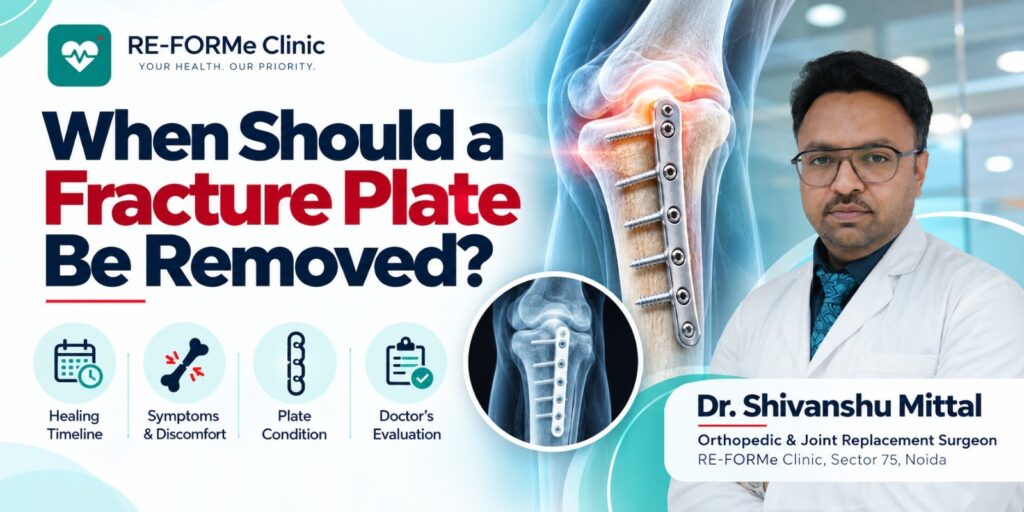
Have you ever wondered whether the metal plate and screws placed during fracture surgery need to be removed after your bone heals?
You may have undergone surgery months or years ago. The fracture has healed, your movement has improved, and you have returned to your daily routine. However, the metal plate is still inside your body, leaving you with an important question: Is another operation necessary?
The answer depends on your condition. In many cases, fracture plates can remain in place without causing problems. However, if an implant causes persistent pain, irritation, infection, or other complications, removal may be considered. Understanding when plate removal after fracture surgery is needed can help you make an informed decision with your orthopaedic surgeon.
Why are Plates and Screws Used After a Fracture?
When a bone breaks, some fractures require surgery to restore the correct position of the broken bone pieces. Metal plates and screws help hold the bone securely while it heals. This procedure is commonly used for certain fractures involving the wrist, forearm, ankle, collarbone, and other bones.
The implant supports the bone during healing, allowing the broken pieces to remain properly aligned. As the bone heals, the body’s natural repair process gradually restores its strength. Once healing is complete, the plate may no longer be needed for support. However, this does not mean that every implant must be removed. Many patients live comfortably with plates and screws for years without experiencing any related symptoms.
Does Every Fracture Plate Need to Be Removed?
No, every fracture plate does not require removal after healing. If the bone has healed properly and the implant is stable, removing it may offer no additional benefit.
Another operation carries risks, including infection, bleeding, nerve injury, and temporary bone weakness. Therefore, doctors generally consider removal when there is a clear medical reason rather than recommending it routinely.
People searching for Plate Removal Surgery in Noida should understand that the decision depends on their symptoms, fracture type, healing progress, and medical assessment. If the plate is not causing problems, leaving it in place may be the most appropriate option.
When is Plate Removal After a Fracture Necessary?
Although most fracture plates can remain in place, certain situations may require further evaluation. Persistent pain around the implant, irritation of nearby tissues, restricted movement, infection, or a loose or damaged plate may lead an orthopaedic surgeon to consider removal.
Common reasons for considering plate removal include:
- Persistent pain or irritation: The plate may press against the skin or irritate nearby muscles, tendons, or other tissues.
- Infection around the implant: An infection may require medical treatment and, in some cases, surgical intervention.
- Restricted movement: The implant may interfere with movement in certain cases, depending on its position.
- Loose or damaged hardware: A problem with the plate or screws may require further assessment and treatment.
However, pain does not automatically mean that the implant is responsible. Joint stiffness, nerve problems, arthritis, or incomplete bone healing can also cause discomfort. Identifying the actual cause is important before deciding whether another operation is necessary.
How Long After a Fracture Can a Plate Be Removed?
There is no fixed timeline for removing a fracture plate. The appropriate timing depends on the bone involved, the severity of the fracture, the patient’s age, and how well healing has progressed.
Before recommending removal, the surgeon may examine the affected area and review X-rays to confirm that the bone has healed sufficiently. Removing the plate before adequate healing can compromise bone stability and increase the risk of another fracture.
If you are considering an Orthopaedic Consultation in Noida, bring your previous X-rays, surgery records, and information about any ongoing discomfort. These details can help the doctor assess your recovery and determine whether plate removal is appropriate.
What Happens During Plate Removal Surgery?
Plate removal surgery involves accessing the previously implanted metal plate and screws and carefully removing them. The procedure is generally performed under suitable anaesthesia, depending on the location of the implant and the patient’s medical condition.
In many cases, the surgeon uses the previous surgical incision to reach the implant. The plate and screws are removed, and the wound is closed. The complexity of the procedure can vary, particularly when screws are broken, deeply embedded, or difficult to access.
Before surgery, your doctor will explain the expected benefits, possible complications, and recovery requirements. Some patients may return home on the same day, while others may require additional observation, depending on their condition and the complexity of the procedure.
What are the Risks of Removing a Fracture Plate?
Plate removal can help patients experiencing implant-related problems, but it is still a surgical procedure and carries certain risks. These may include infection, bleeding, nerve injury, wound-healing problems, stiffness, and persistent pain.
The bone may also remain temporarily vulnerable after the plate is removed because screw holes can create weak points. Depending on the affected bone and the complexity of the procedure, patients may need to avoid heavy lifting, running, or high-impact activities for a period.
Important precautions after plate removal may include:
- Follow the surgeon’s instructions regarding walking, lifting, and other physical activities.
- Keep the surgical wound clean and attend scheduled follow-up appointments.
- Avoid strenuous exercise until your doctor confirms it is safe.
- Seek medical attention if you notice fever, wound discharge, increasing redness, or worsening pain.
Following medical advice is important during this stage and can help reduce avoidable complications.
What is Recovery Like After Plate Removal Surgery?
Recovery depends on the implant’s location, the extent of the procedure, and your overall health. Some patients experience mild swelling, tenderness, or discomfort around the surgical wound during the initial recovery period.
Keeping the wound clean, attending follow-up appointments, and following the prescribed instructions can support recovery. Physical activity should be resumed gradually, particularly when the affected bone needs additional time to regain strength.
Avoid returning to demanding exercise or heavy physical work until your surgeon confirms that it is appropriate. Recovery timelines vary, so follow your doctor’s advice rather than comparing your progress with someone else’s experience.
Can a Fracture Plate Cause Pain Years Later?
Yes, a fracture plate can sometimes cause discomfort even years after surgery. This may happen when the implant presses against surrounding tissues, irritates a tendon or nerve, or becomes prominent beneath the skin.
However, pain around an old fracture can have several other causes. Arthritis, joint stiffness, nerve irritation, and problems related to the original injury may produce similar symptoms. Removing the plate will not necessarily resolve pain caused by these conditions.
An Orthopaedic Surgeon in Noida can assess your symptoms, examine the affected area, and recommend appropriate investigations when necessary. The goal is to identify the cause of the discomfort before deciding whether implant removal or another treatment is required.
When Should You Consult an Orthopaedic Surgeon?
If you experience persistent pain around a fracture plate, restricted movement, increasing discomfort, or skin problems near the implant, an orthopaedic assessment can help determine what is happening.
Patients from Sector 72, Sector 73, and Sector 76 may consider consulting Dr. Shivanshu Mittal at RE-FORMe Clinic, Sector 75, Noida, for orthopaedic evaluation.
During your consultation, discuss when your symptoms began, which activities make them worse, and whether you have noticed any changes in movement. Previous X-rays and operation records can also help the doctor understand your medical history and assess whether further treatment is necessary.
How Can You Make the Right Decision About Plate Removal?
Deciding whether to remove a fracture plate requires an understanding of both the potential benefits and the risks. If the bone has healed completely and the implant is not causing problems, leaving it in place is often appropriate. If there is persistent irritation, infection, or another implant-related complication, removal may be considered.
Before making a decision, discuss the following points with your orthopaedic surgeon:
- Bone healing: Has the fracture healed completely, as confirmed by clinical assessment and imaging when needed?
- Reason for removal: Is the implant causing symptoms or complications that removal could address?
- Possible risks: What are the risks of surgery and the precautions required afterwards?
- Recovery requirements: How long might you need to restrict physical activities based on the bone involved and the procedure?
The most suitable approach depends on your symptoms, examination findings, and healing progress. Rather than deciding based on how long the plate has been inside your body, discuss your concerns with an orthopaedic surgeon who can assess your individual condition.
Dr. Shivanshu Mittal, Orthopaedic and Joint Replacement Surgeon at RE-FORMe Clinic, Sector 75, Noida, can evaluate fracture-related concerns and discuss suitable treatment options. A proper assessment can help you understand whether another procedure is necessary and how to approach recovery safely.
Frequently Asked Questions
Is plate removal necessary after a fracture?
No. Plates and screws can generally remain in place if the bone has healed properly and the implant is not causing pain or other complications. Removal is considered when there is a specific medical reason.
How long after a fracture can a plate be removed?
There is no fixed timeline. The surgeon assesses bone healing, the type of fracture, and any implant-related symptoms before deciding whether removal is appropriate.
Can a fracture plate cause pain years after surgery?
Yes. An implant may irritate nearby tissues or press against the skin. However, pain can also result from other conditions, so a medical assessment is important before considering removal.
Is plate removal surgery risky?
Like any operation, plate removal carries risks such as infection, bleeding, nerve injury, and temporary bone weakness. The risks depend on the implant’s location and the complexity of the procedure.
When should I consult an orthopaedic surgeon about a fracture plate?
Consider an assessment if you experience persistent pain, restricted movement, or increasing discomfort around the implant. Fever, wound discharge, or rapidly worsening symptoms require prompt medical attention.