

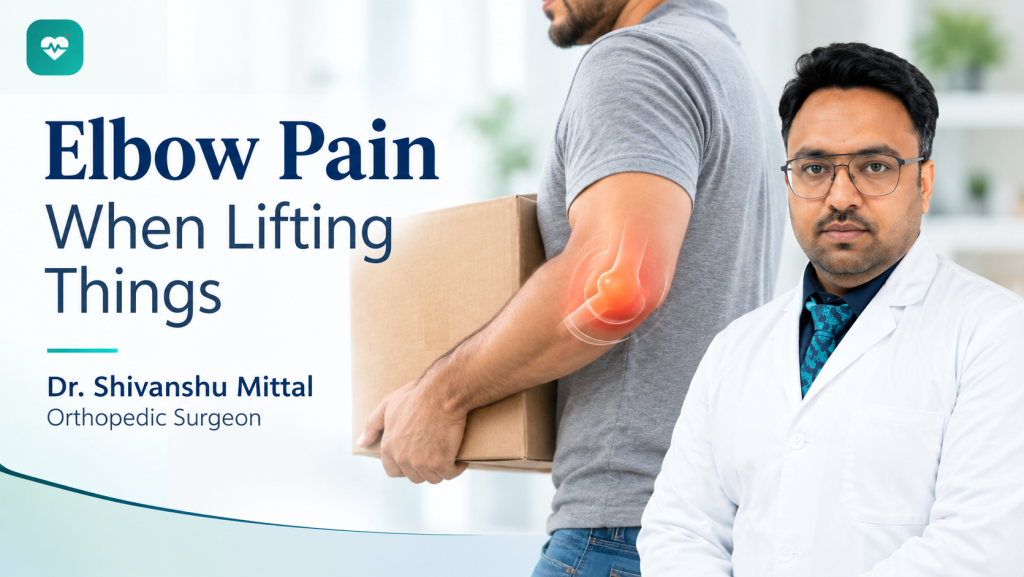
Have you ever experienced pain around your elbow when lifting a bag, holding on to a bottle of water, opening a jar or being helpful around the house? Elbow pain is a common complaint that can plague people of all lifestyles. It can start as a minor irritation but progress to impede the use of a number of day to day tasks.
People living with elbow pain often choose to ignore it, however, repeated pains, swellings, stiffness or restricted movements often signal the need for an intervention.
Repetitive movements, muscle strains, playing sport, and a number of other factors can all contribute towards elbow pain. Understanding the condition and its possible causes can help you understand when changes to your lifestyle may help and when you should meet an orthopaedic doctor for further insight.
1. What Are the Common Causes of Elbow Pain?
The elbow is a complex structure that allows bending and straightening of the arm, as well as lifting and carrying of objects. As the joint is involved in numerous daily activities, it is highly susceptible to strain.
The most common cause of elbow pain is the irritation of tendons. Repeating actions that require you to strain the wrist and forearms can cause a number of uncomfortable sensations. As someone who engages in a number of activities, such as typing on a keyboard, lifting objects, playing sports, gardening, and helping out around the house, the risk of tendon irritation becomes significantly high.
Elbow pain can also be triggered by a fall, a twisting movement, or an injury during a sport. Sometimes, the discomfort can be a result of a number of conditions that affect the joints, or the irritation of a nerve in the area. The location and nature of your pain may help in diagnosing the issue; however, a detailed evaluation may be necessary to pinpoint the concern.
Common causes of elbow discomfort include:
- Repetitive movements: Straining the tendons and muscles by repeatedly lifting, gripping, or moving the wrist can cause pain around the elbow.
- Tennis elbow: Pain around the outer part of the elbow may develop as a consequence of repeated muscle use near the area.
- Golfer’s elbow: This condition involves irritation of the tendons on the inner part of the elbow and can cause pain in the area.
- Injury: The discomfort around the elbow may develop as a result of a fall or an impact on the area.
- Nerve irritation: Some conditions, such as tingling sensations, pain, or numbness that extend into the forearm or fingers, may indicate the involvement of a nerve.
If your elbow pains keep recurring, an Orthopedic Doctor in Noida can assess the condition and advise further management.
2. Why Does Your Elbow Hurt When Lifting or Holding Things?
Pain around the elbow while engaging in lifting activities generally manifests as a consequence of repeatedly straining the area. One of the most common times when this discomfort is evident is during the act of lifting shopping bags, or bottles, holding a heavy object, or exercising. Pain may also be evident around the inner elbow on specific movements, such as bending the wrist or carrying an object.
Tennis elbow is a common condition that is often associated with discomfort around the outer part of the elbow. Although the name may suggest otherwise, it can affect not just those who play the sport of tennis. People who engage in a number of repeated movements in their day jobs or at home may find themselves developing a similar irritation around the elbow area.
Pain around the inner part of the elbow may stem from a similar condition, referred to as golfer’s elbow. Those who experience this often find themselves experiencing discomfort on bending their wrist or carrying objects.
Some common signs that may indicate the involvement of the elbow are:
- Pain while gripping or lifting objects.
- Tenderness around the inner or outer part of the elbow.
- Discomfort while bending or straightening the arm.
- Swelling or stiffness around the joint.
- Weakness, tingling, or numbness in the hand or forearm.
It is important to avoid repeatedly testing the painful movement as this can cause further damage. If the discomfort is a persistent issue or affecting your daily routines, you may wish to consult a Joint Specialist in Sector 75, Noida for an appropriate evaluation.
3. What Can You Do at Home to Manage Mild Elbow Pain?
If you are experiencing a mild discomfort around the elbow, with few additional warning signs, it may be helpful to limit the activities that cause the most strain on the area. It is important to limit repetitive lifting, gripping, and movements that aggravate the discomfort as you allow the area to heal.
Applying a cold pack wrapped in a towel around the elbow can help to limit discomfort after activity. Avoid applying the pack directly on the skin and limit the application to 15–20 minutes at a time. Gentle movements can help to avoid stiffness, but avoid any movements that aggravate the pain.
In addition, you can make some minor changes to your day-to-day life to reduce the chances of further irritation:
- Limit repetitive gripping and lifting when it causes discomfort.
- Hold objects closer to your body when possible.
- Take breaks in between repetitive activities.
- Avoid sudden increases in physical activity.
- Return to normal activity once the discomfort has cleared.
Avoid relying on at-home treatments if the pain is persistent, worsening, or affecting your ability to use your arms. Limit the use of pain medications without the recommendation of a medical professional.
4. When Should You Consult an Orthopaedic Doctor for Elbow Pain?
Occasional pains or discomfort around the elbow joint are often limited to occasional activities and ease off on their own. However, if the discomfort persists, recurs frequently, prevents normal gripping, or causes swelling, it may be a reason to consult a doctor. A medical professional may enquire about the timing of the pains, the activities that aggravate them, and whether there is an associated injury. The evaluation may involve a physical examination of the movement, tenderness, and strength of your elbow. An x-ray of the area may also be recommended depending on the findings.
If your elbow has been twisted or injured and appears deformed, or if you are unable to move the arm normally, you ought to seek immediate medical attention. Similarly, sudden pains that accompany significant swelling and fever also require urgent evaluation. Likewise, any new or worsening numbness or weakness in the arm should also be brought to the notice of a medical professional urgently.
Dr. Shivanshu Mittal offers orthopaedic consultations at RE-FORMe Clinic, Sector 75, Noida, for bone and joint-related concerns.
5. How Can You Reduce the Risk of Elbow Pain?
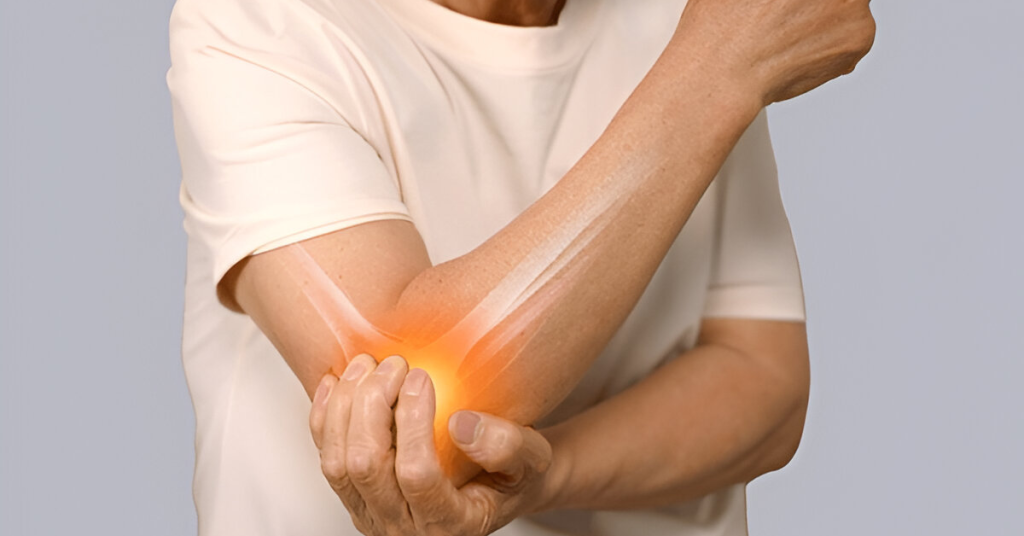
Making small lifestyle and activity-related changes to avoid placing excess strain on your elbow can significantly reduce your risk of developing elbow pain. Avoid putting unnecessary stress on the area and make sure to limit repetitive activities that involve gripping or using your wrists.
If you play sports or are physically active, make sure to use the correct techniques, and do not suddenly increase the intensity of your activities. Similarly, warming up before physical activity and allowing your body to recover in between can limit the chances of strain. When a particular movement repeatedly causes discomfort, avoid such activities and seek guidance rather than try to push through.
When you begin to notice signs of initial discomfort and these keep coming back with repeated activities, it is important to address the issue soon rather than later to avoid it from becoming a persistent problem.
Frequently Asked Questions
1. Why Does My Elbow Hurt When I Lift Something?
Elbow pains while lifting things can be caused by a number of conditions, such as tendon irritation, strain, or injury. If the pain is persistent or affecting your ability to grip, it is best to consult a doctor.
2. What Is Tennis Elbow?
Tennis elbow is a condition caused by irritation of the tendons near the elbow. While it can occur in those who play the sport, it may also affect people who engage in repeated forearm activities.
3. Can Elbow Pain Improve on Its Own?
Mild pains that are caused by temporary strain can often ease on their own with a change in activity. Persistent or worsening pains should be evaluated by a medical professional.
4. When Should I See a Doctor for Elbow Pain?
A doctor should be consulted for elbow pains that recur, cause discomfort while engaging in day-to-day activities, or present with swelling. Severe pains following an injury also require evaluation.
5. Which Doctor Should I Consult for Elbow Pain in Noida?
An orthopaedic doctor can evaluate elbow pain and recommend appropriate management. Dr. Shivanshu Mittal can be consulted at RE-FORMe Clinic, Sector 75, Noida.